October 20, 2026
How AI Is Changing How Mobile Games Get Made and Played
See how AI is reshaping mobile game creation, from prompt-to-play prototypes to smarter NPCs, live tuning, and shipping to phones without a studio.
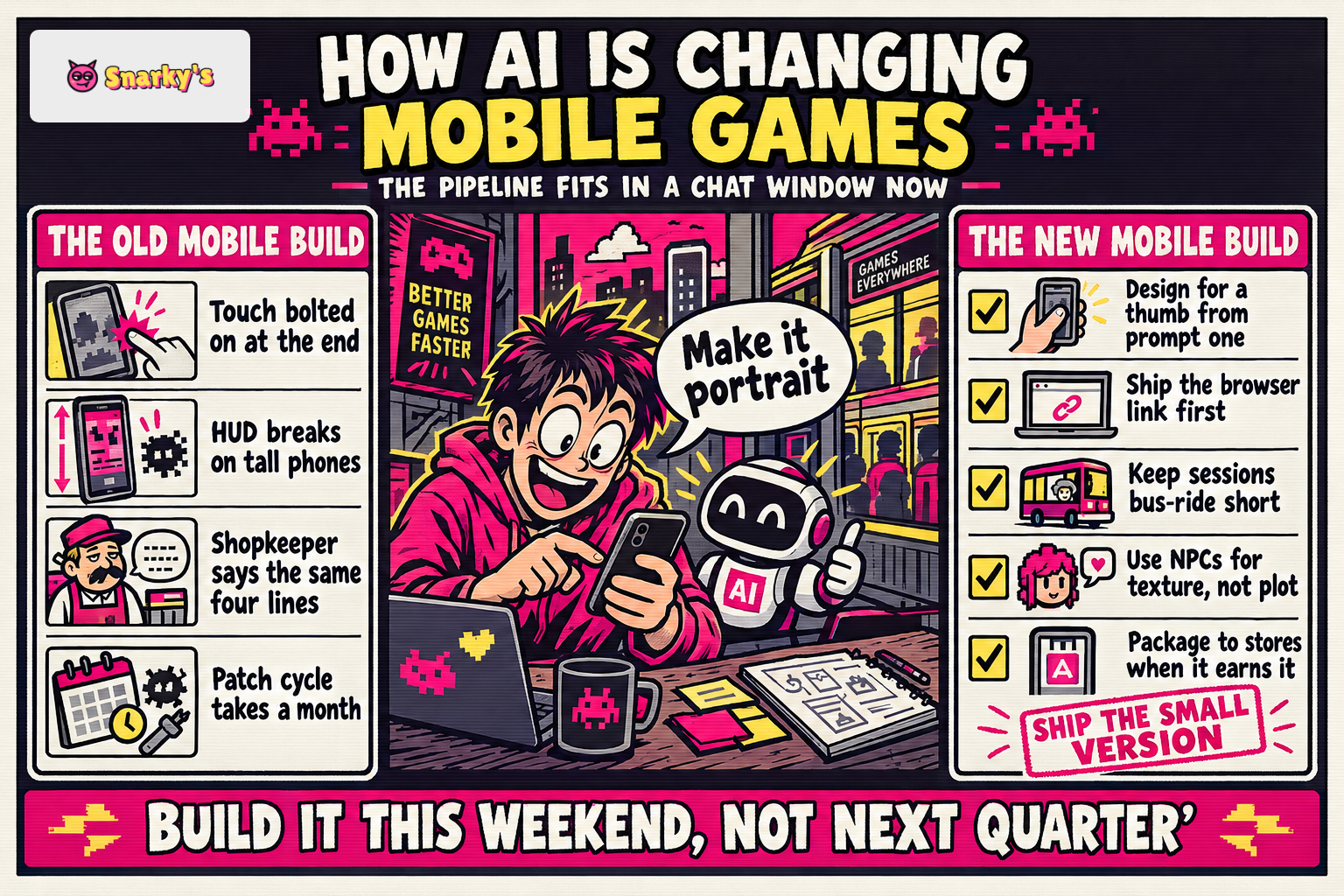
Mobile has been the biggest games market on the planet for years, and the standard way in has looked the same for most of that time: pick an engine, learn it for months, hire an artist or scrape asset stores, fight the touch input yourself, and pray the first build does not crash on a four-year-old Android. That path still exists. It is just no longer the only one.
The quiet shift of the last eighteen months is that AI has started handling the specific chores that used to kill hobbyist phone games before they got played: wiring touch controls to a core loop, surviving every screen shape, keeping an NPC's dialogue interesting past the second line, and nudging difficulty when the data says players are quitting at the same wave. None of that is magic. It is a pipeline collapse. And it changes who gets to ship.
So what actually moves when AI handles the plumbing, and what still falls to you?
The Pipeline Collapses Where Phones Hurt Most
Three jobs used to eat the first weeks of a mobile build: input, layout, and tuning. Input, because touch is not a controller placed on glass and asks the player to cover part of the screen while aiming. Layout, because a HUD designed for a 16:9 monitor breaks on a tall phone and breaks again on a tablet. Tuning, because you cannot feel difficulty from a spreadsheet, you feel it from a thumb cramping on wave seven.
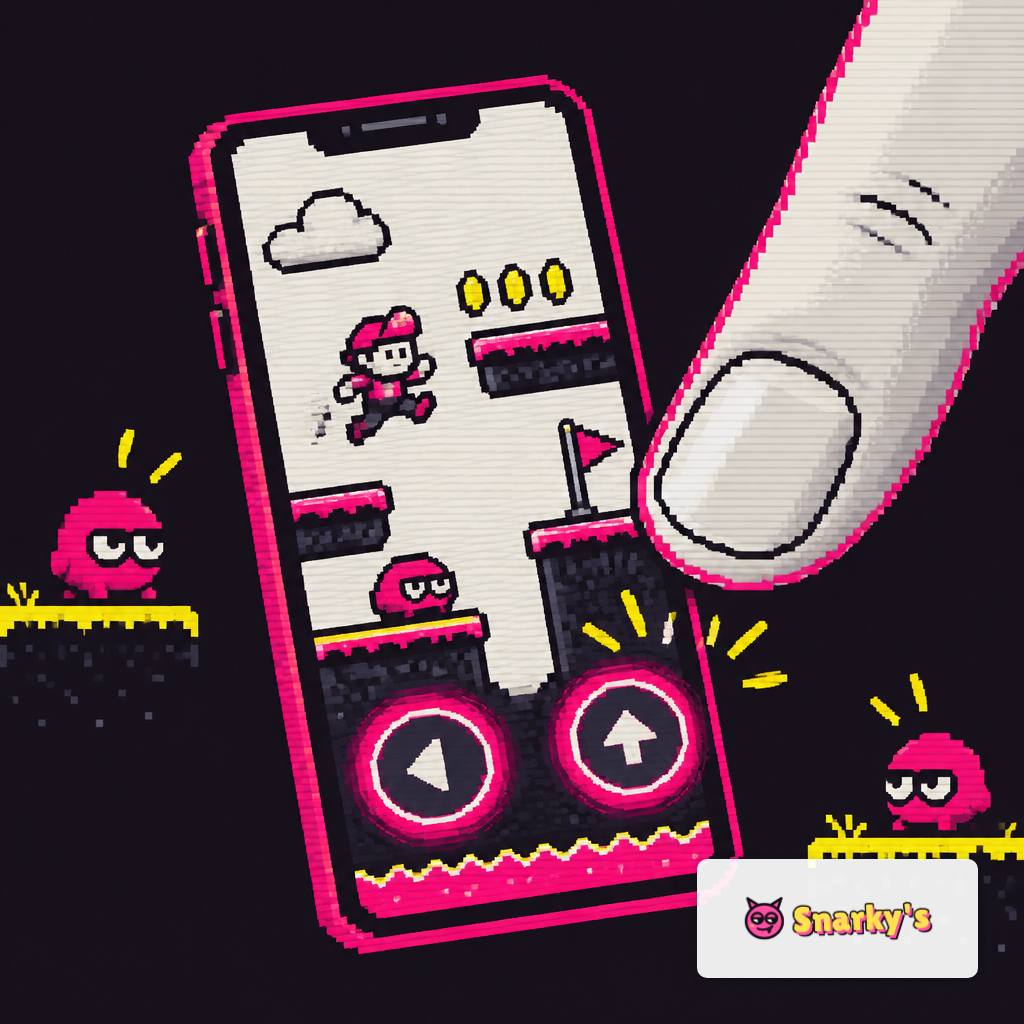
With a prompt-driven maker, those stop being weeks of setup and start being sentences. Describe swipe to steer, tap to brake, a joystick in the bottom-left thumb zone, a portrait lock, and the project is wired. Ask to shrink the fire button, add haptics on hit, or move the pause icon out of the notch, and the editor applies it live. The judgment is still yours. Knowing to ask for a bigger thumb zone, or to kill a second stick because thumbs cannot share the screen, is a design call no model makes for you.
The payoff is that the first playable on a real phone arrives on day one instead of day ten. That is the entire reason the hobbyist pool is growing.
Browser Games on Phones Are Suddenly a Real Distribution Channel
For a long time, "mobile game" meant a store listing. That is still the biggest market, but it is no longer the only on-ramp. A browser game built on Phaser or Three.js opens from a link, works on any phone with Chrome or Safari, and skips the review queue entirely. For a creator who wants friends, a classroom, or a Discord to actually play the thing, that is a different relationship with distribution than the App Store ever offered.
The numbers behind this are not small. Downloads of generative AI apps doubled year-over-year to 3.8 billion in 2025, with in-app purchase revenue nearly tripling past $5 billion, and GenAI-capable phones are forecast to make up 45% of global smartphone shipments in 2026. The phones in people's pockets are getting better at running the exact kind of generated content browser engines render well. A tap on a link is a lower bar than an install, and tap-first distribution is where most quick-share creators actually live.
Snarky's leans into that split on purpose. You can share a Make a game link and have someone playing in seconds on their phone, and when a game earns the audience, you can package it for the stores using your own developer accounts. The browser is the test track. The store is the finish line, when the game is good enough to deserve one.
Live Balancing Replaces the Guess-and-Patch Cycle
The old mobile playbook was: ship, read reviews, patch next month. The new one treats balance as a conversation with the data. If a chart shows seventy percent of players failing the third boss, you ask the maker to drop its health by fifteen percent and widen the dodge window, and the change is live for the next session. If a reward curve is pushing players to grind for forty minutes before the first upgrade, you shorten it the same way.
None of that is unique to AI. Live-ops teams at big studios have done it with analysts and designers for a decade. What is new is that a solo hobbyist now has the same loop without the staff. The honest caveat: live tuning only helps if you have players in the first place, and shipping something small that someone finishes beats shipping something sprawling that nobody opens. The one-prompt build approach is a way to get to that first-finished-game faster, not a shortcut around taste.
AI NPCs Change What a Mobile Game Can Be About
Dialogue trees used to be a budget item. A full branching conversation meant a writer, a voice director, and a localization pass, which is why most mobile RPGs settled for a shopkeeper who says the same four lines forever. AI NPCs change the math. A character that talks inside a game can riff on what the player just did, remember a choice from an hour ago, or react to the specific weapon in the player's hand.
That opens design space that was previously closed to anyone without a studio behind them. A detective game where you actually interrogate suspects. A tavern where regulars have moods. A pet sim where the pet remembers being neglected. The craft question is restraint. An NPC that will say anything about anything feels like a chatbot in a costume. One that stays in character, keeps its facts straight, and knows when to shut up feels like a character. The maker gives you the tool. The script you put behind it decides whether it is charming or exhausting. Browse Discover games and you can feel the difference inside two minutes of play.
Players Can Tell, and They Judge Harder Than You Think
The other side of the shift is a reputation problem that is worth taking seriously. By mid-2026, 30.8% of new games released on Steam carried an AI disclosure, up from 19.9% in 2025 and 10.9% in 2024. A review study of 508,192 Steam reviews found a 17.9 percentage point recommendation gap between procedurally generated games and generative AI games, pointing to a more negative experience with AI content. Even more awkward: when players tried to tell AI-generated levels from human-made ones, accuracy was barely above chance, yet content believed to be AI-made was rated as less fun and more frustrating than identical content believed to be human-made.
Translated to practice: the floor you have to clear is not "did an AI help build this" but "does this feel like someone cared." Mobile players will drop a game inside ninety seconds if the first level is filler. Use the AI to get to a playable fast, then spend the time you saved on the moments that would never survive a studio schedule. The weird enemy. The joke in the loading screen. The boss that is not just a bigger enemy.
What a Hobbyist Should Actually Do With All This
The practical read, if the goal is a mobile game people play on a phone this quarter, looks like this:
- Design around a thumb from the first prompt. Portrait if the loop is one-handed, landscape if it genuinely needs two. Virtual joystick only if the game cannot work with taps and swipes.
- Ship the browser version first. A link in a group chat tells you more in a weekend than three weeks of polish.
- Keep sessions short. Phone play happens in bus rides and bathroom breaks, not two-hour sittings.
- Use AI NPCs for texture, not for load-bearing plot. A character with a mood beats a character with a monologue.
- When the browser version has a small audience that keeps coming back, then publish mobile game builds to the stores using your own developer accounts. The order matters.
The user-generated side of the market is where this all points. Roblox creators earned over $1.5 billion in revenue share payouts in 2025, up 70% year-over-year, with the platform averaging over 150 million daily active users at the end of 2025, and Roblox's Cube model turns a text prompt into a 3D object inside its editor, with early AI-generated content tests showing a 64% jump in average play time. The appetite for small, specific, remixable games is not theoretical. Over on the social end, Astrocade reached roughly 5 million monthly users within a year of launch, which suggests the prompt-to-playable idea is past the party-trick stage for simple genres.
None of which guarantees your game will land. Taste still decides, art direction still decides, the thirty seconds after a player taps the icon still decide. What AI changes is who gets to find out. The pipeline that used to require a team now fits inside a chat window, which means the hobbyist with an idea no studio would greenlight is the one most likely to make the next weird hit on a phone screen. The useful move is to stop waiting for permission and build the small version this weekend.
Describe a game. Play it seconds later.